
Three Commands and an Opinion
Tal walked a roomful of business operators through the terminal this week and watched their faces relax in real time. The lesson wasn't the terminal — it was that the whole barrier to building things with AI was never the technology, and the people winning right now aren't the most technical,…
For a long time I thought the thing standing between people and building with AI was the technology. After this week, I don't think that anymore.
Thursday afternoon I was on a call walking a room full of business operators into the terminal for the first time. If you don't know what the terminal is — and most people don't — it's that scary black-and-white window with no buttons, the one that's just text, no icons, no mouse. People have a real, almost physical reaction the first time they open it. Wait. Why am I here? Where's the screen?
So I told them: I'm not saying you have to live in here. But in the next ninety minutes you're going to learn that this thing you've been afraid of for ten years is basically three commands.
cd — change directory. It's how you walk into a folder. mkdir — make directory. It's how you build one. And then claude (or codex, if you're a ChatGPT person), which opens the AI right inside that folder, where it can see your files and your project and just sits there waiting for you to talk to it.
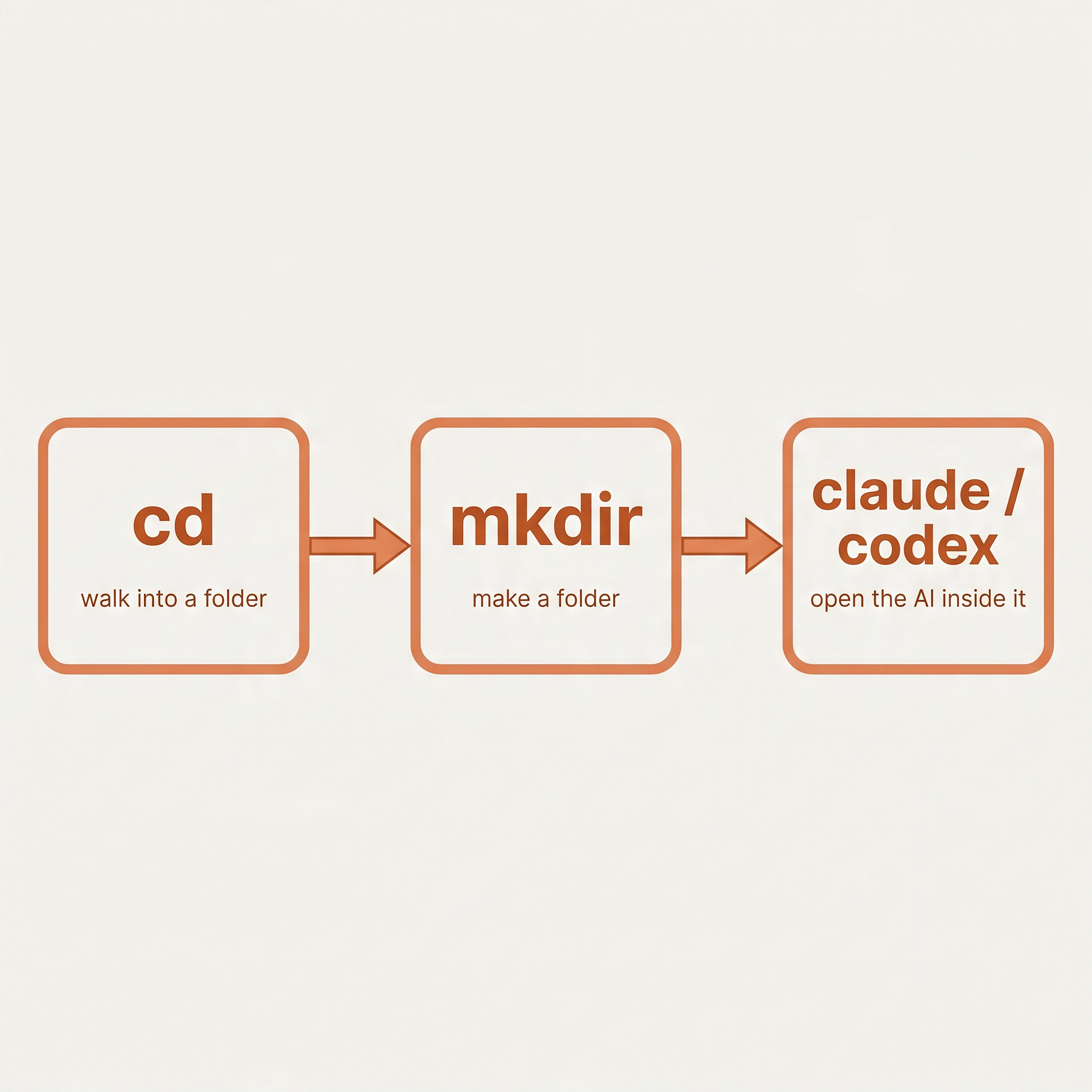
That's it. That's the wall people spent a decade building up. And I watched faces in the room relax in real time as it landed.
But here's the thing I actually want you to take away, because it's bigger than the terminal. If you only listened to the literal content of that call, you'd think it was a how-to. It wasn't. What was really happening was a roomful of capable adults discovering that the thing they'd assumed required a special kind of person… doesn't.
The tools already collapsed. The barrier to building a working website, a working automation, a real internal tool — it's gone. I can put a live website on the internet in fifteen minutes that's better than what an agency charged eight grand for two years ago. So if the tools aren't the barrier anymore, what is?
It's whether you can look at what comes out and have an opinion about it.
Here's my favorite example. On a different call that week I was building a fishing-bait company on the spot, and the AI named it "Weight Cast." Technically fine. Totally forgettable — the name of a brand that fades into the wallpaper. So I said, no, that's not it, and we went with Loon Lake Tackle. Because that sounds like a place. Like somebody's grandfather's shop. The AI gave me a name in three seconds. What it could not do was care that the first one was forgettable. It couldn't taste it.
That "no, that's not it" is the whole job now.
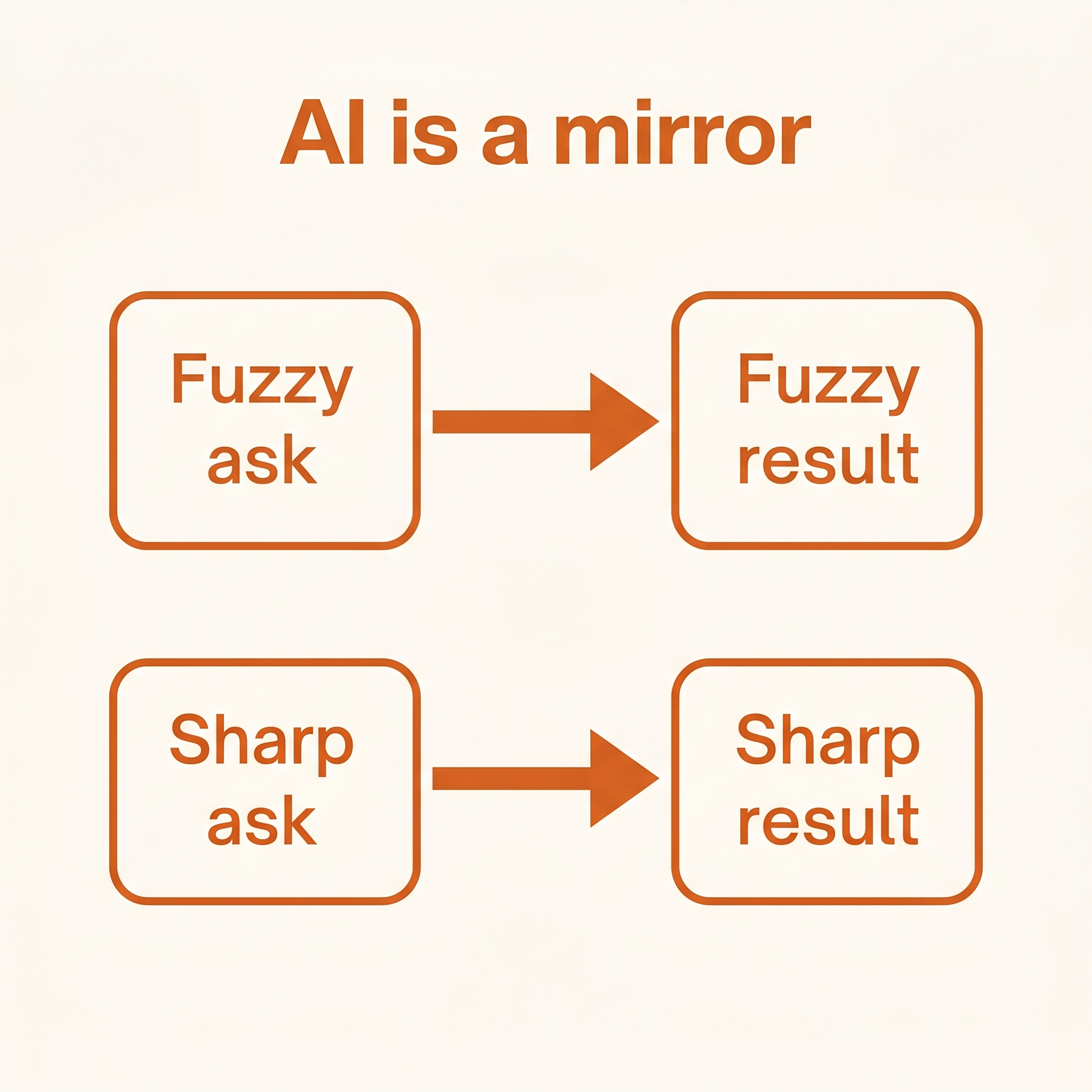
This is the drum I keep beating: AI is a mirror. It rewards clear thinking and exposes fuzzy thinking. Walk up with a fuzzy ask, you get a fuzzy answer. Walk up with a sharp one, you get something sharp. The people pulling away from their peers aren't the most technical — they're the ones who can say what they actually want.
Now let me be honest about the messy parts, because I'm not doing the everything-is-magic routine. A guy I work with had his terminal tool just break this week — some update shifted underneath him — and I got on a call and couldn't fix it in thirty minutes. That's the real state of this stuff. The leverage is enormous; the polish isn't always there. Anybody selling you a frictionless ride is selling you something. The friction is just way smaller than it used to be, and it pays off way more when you push through.
And here's why any of it matters — and this isn't a tagline. Last weekend I took my five-year-old camping before all these calls. Sitting there on Thursday watching operators learn the terminal, I kept thinking: what is this actually for? I'm clear about it. I'm trying to compress the work so I have more time for the campsite.
Because the dirty secret of this whole wave is that the leverage is real, but it doesn't automatically flow to your evenings. It only flows there if you take it — if you push the boring work through the tools and then take the time back, on purpose. The default is that you just fill it with more work. That's the thing I have to fight every single week.
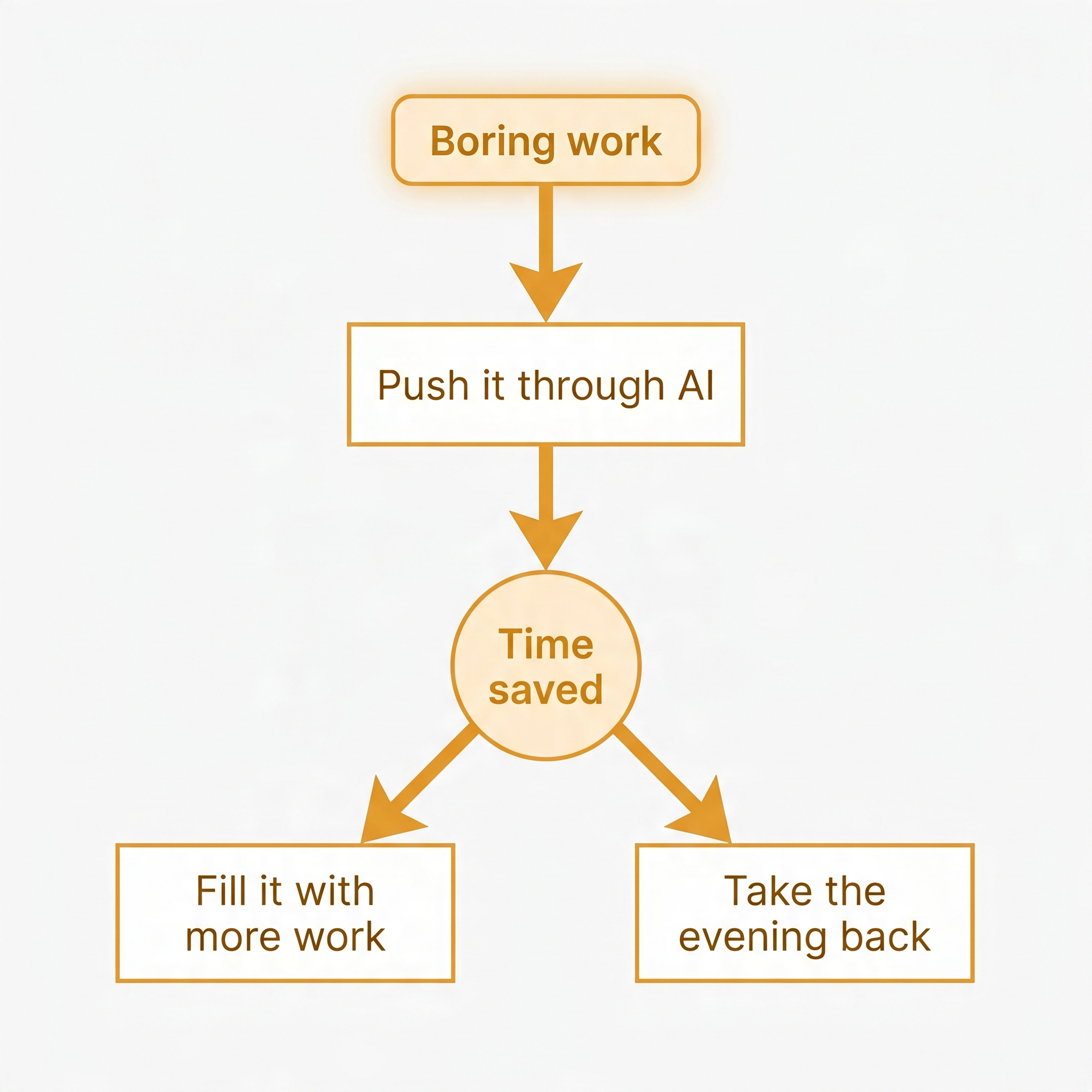
So if you take one thing from this: the barrier isn't the technology, and it's getting harder to even pretend it is. The barrier is whether you have an opinion — whether you can say what you want, look at what came back, and say no, not that, this. The operator who pulls away this year doesn't need to learn to code. They need to get clear. And the parent who wants to be home for dinner won't get there by working harder — they'll get there by taking the leverage that's sitting three commands away and pushing the boring work through it, on purpose, so there's something left over for the people who actually matter.
Substance over hype. People over tools. Clarity over cleverness.
Build with the tools I trust → lvluplocal.com