
75 Years in Russellville
You don't stick around for 75 years by accident. When a business outlasts recessions, pandemics, technological revolutions, and the rise and fall of entire car brands, there's something deeper going on than just selling a good product. Cogswell Motors has been part of Russellville's fabric since 194
You don't stick around for 75 years by accident.
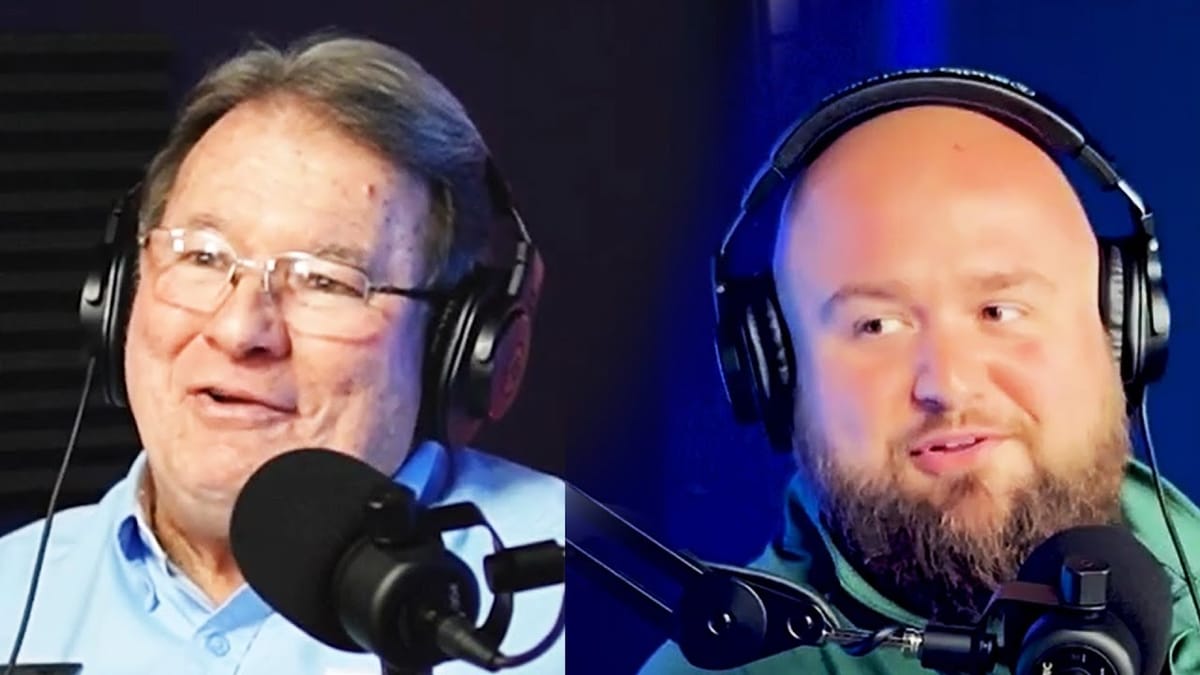
When a business outlasts recessions, pandemics, technological revolutions, and the rise and fall of entire car brands, there's something deeper going on than just selling a good product. Cogswell Motors has been part of Russellville's fabric since 1949, and talking with Ed Schwartz and Jacob Reddell—who together represent nearly 42 years of combined experience at the dealership—reveals what that "something deeper" actually is.
It's not magic. It's not luck. It's the kind of patient, deliberate relationship-building that seems almost countercultural in 2024.
The Vanishing Art of the Long Game
Ed Schwartz has been at Cogswell Motors for 35 years. Carl's been there 57. Richard, 44. David, over 20.
When Jacob Reddell walked onto the sales floor as a young guy with no dealership experience almost eight years ago, he walked into a room full of people who'd made careers—entire adult lives—in one place. "If it's a revolving door, it's probably not the right place for you," Jacob told me. "To see those guys stay there for 30, 40 years... that's what I want to be."
That kind of tenure is increasingly rare. According to the U.S. Bureau of Labor Statistics, the median employee tenure in 2024 is just 4.1 years. In retail trade specifically, it's even lower—around 3 years. We've normalized the job-hopping resume, the constant churn, the LinkedIn update every 18 months announcing a "new opportunity."
There's nothing inherently wrong with that. But we've lost something in the process: the deep knowledge that only comes from watching a community change over decades. The trust that builds when a customer knows you'll still be there in five years to honor what you promised today.
Ed puts it simply: "The key in car sales and any sales is just a long-term relationship with your customer—if you intend to be around long enough to sell them more than one time."
Why Russellville Needs More Multi-Generational Businesses
When Ed started at Cogswell in 1989, downtown Russellville was a ghost town by 6:30 PM. "You'd go home after work and there was nothing going on," he said. "You do that now and every parking spot's full."
He's watched the city expand outward—Walmart moving further and further from the center, shopping centers rising and aging, entire commercial districts reshaping themselves. But he's also watched the downtown come back to life over the last 10 to 15 years, transformed by local investment and the kind of patient, steady belief in place that mirrors his own career path.
Communities need anchors. Not just physical buildings, but *people* who remember. People who were here for the last downtown revival attempt in the '80s, who know which ideas worked and which didn't. People who've served three generations of the same family and understand how needs change across a lifetime.
According to a 2016 study by the Institute for Local Self-Reliance, locally-owned businesses recirculate roughly three times more money back into the local economy compared to national chains. But the benefits go beyond economics. Long-tenured local businesses create what researchers call "social capital"—the networks of relationships and trust that make a community resilient.
When Jacob helped get state championship rings for the Pottsville High School unified sports team (which combines special education students with traditional athletes), he wasn't executing a corporate 'giving strategy'. He was scrolling Facebook at home, saw kids who deserved recognition, and knew he worked somewhere that would back him up. "It was like, what can I do to help these kids get their championship?" he said.
That's what happens when employees aren't just passing through.
The 75 Acts of Service: A Different Kind of Anniversary
For their 75th anniversary in 2024, Cogswell Motors didn't throw themselves a party. They committed to 75 acts of service throughout the year.
Some were financial—helping fund those championship rings, supporting concession stands at local schools. Some were simpler—delivering donuts to teachers (Ed's wife is a teacher; so are the wives of several other longtime employees). "A couple dozen doughnuts... a teacher doesn't get a lot of recognition," Ed said. "I don't know how much it meant, but my wife acted like she appreciated it."
This isn't charity as marketing. It's what happens when a business is genuinely embedded in a place. When your coworkers' spouses teach your customers' kids. When you've been here long enough to remember which families have bought from you for three generations.
"We're real community-based," Jacob said. "I love Russellville, plan to be here for the rest of my life, plan to be at Cogswell for as long as I'm working."
What We're Actually Buying When We Buy Local
Here's what Ed said about his job that stuck with me: "When I see a customer that's really happy with their car purchase, it thrills me probably as much, if not more, than it does the customer—because I don't have any anxiety about having to pay for it." (LOL)
He's talking about a car sale, but he's really talking about legacy. About the satisfaction of doing something well enough that people come back. About being part of something that outlasts you.
The average person buys a car every 4-7 years, Ed explained. It's the second-biggest purchase most people make after a house. "It's something you have to be careful with," he said. "It's a major decision for them, for something that we do two or three times a day."
That perspective—remembering that your routine is someone else's major life event—only comes from longevity. From enough repetition that you can zoom out and see the pattern. From enough years that you're selling to the children of people you sold to decades ago.
Research from the American Independent Business Alliance shows that for every $100 spent at a locally-owned business, $68 stays in the local economy. For chain stores, it's $43. But those studies can't quite capture what happens when the person selling you something has been watching your town change for 35 years, has a stake in its future, and will still be here to make things right if something goes wrong.
The Cogswell Building: A Physical Metaphor
The original Cogswell dealership was downtown, in what's now the Laws Building off Arkansas. When they moved to their current location on East Main in 1966, they were following the outward expansion of commerce—getting out of the landlocked downtown to where they had room to grow.
They've remodeled multiple times since, most recently completing a major renovation in 2020 (which they started in February 2020, because apparently someone has a sense of humor about timing). The interior is completely transformed—so much so that Ed, who's been there 35 years, still sometimes has trouble picturing where the old walls used to be.
"It's a very modern, very open, little more welcoming design," Ed said. "It actually looks like a cafe inside more so than just a little waiting area."
But here's the thing: they didn't move. They renovated where they were. They invested in their spot on East Main, in the infrastructure, in staying put and improving rather than chasing the next development on the edge of town.
That's the physical version of what their employees are doing with their careers.
What This Means for Young People Staying in Russellville
Jacob mentioned something I've heard from a lot of people our age: "My plan growing up was to leave Russellville. I thought I didn't like Russellville."
I get it. For years, the narrative was clear: if you wanted a real career, you left. You went to Little Rock, or Fayetteville, or further. Small towns were where you were *from*, not where you built something.
But Jacob's story suggests a different possibility. "Never would I have thought I'd be where I'm at now in a career like I am," he said. "It's all thanks to you guys... it's been life-changing."
He walked in off the street with no dealership experience at probably 19 or 20 years old. He's now been there almost seven years, calls Ed his "work dad," and plans to stay for his entire career.
The Arkansas Economic Development Institute released data in 2023 showing that Arkansas loses approximately 40% of college graduates to out-of-state opportunities within five years of graduation. Pope County specifically has struggled with "brain drain"—young professionals leaving for larger metros.
But initiatives are changing. The old Ford building downtown (the one with "Ford Motor Company" on the capstone, though it was never actually a Cogswell location) has been renovated into the Co-Create Innovation Hub—a space for entrepreneurs, startups, and small business owners to access resources, office space, legal help, and grant writing support.
That's the kind of infrastructure that keeps young people around. Not just jobs, but *careers*. Not just paychecks, but the chance to build something that lasts.
The Second-Biggest Decision You'll Make
Ed said something early in our conversation that reframed how I think about major purchases: "A potential customer is something that every one of us have to realize only does this once every four, five, six, seven, eight, ten years."
He's talking about cars, but the principle applies to everything. The vendors and service providers we choose become part of our lives for years. We're not just buying a product; we're buying into a relationship.
When you work with someone who's been serving your community for decades—who remembers your dad buying his first truck, who went to school with your cousin, who's going to be here when you need warranty work in three years—you're buying something different than a transaction.
You're buying continuity. Accountability. The kind of trust that only comes from time.
A Different Kind of Success Story
We celebrate the unicorn startups, the viral successes, the entrepreneurs who scale fast and exit faster. And there's a place for that.
But we don't talk enough about the beauty of just... staying. Of getting better at something year after year. Of building relationships so deep they span generations. Of being so embedded in a place that its wins feel like your wins, its needs feel like your responsibility.
Cogswell Motors has been in Russellville for 75 years not because they had some brilliant secret strategy, but because they showed up. Every day. Through economic downturns and booms. Through the rise of the internet and the decline of sedans. Through five different decades of change.
Ed's been there for 35 of those years. He started in finance, moved to sales, became a manager. He's sold cars to grandparents, their kids, and now their grandkids. He's watched downtown Russellville empty out and come back to life. He's seen car technology go from carburetors to computers.
And he's still there. Still showing up. Still remembering that for his customer, this is the second-biggest purchase of their life, even though for him it's Tuesday.
That's not just a career. That's a legacy.
You can hear the full conversation with Ed Schwartz and Jacob Reddell on the Level Up podcast:

Click here to play the podcast
Cogswell Motors is located on East Main Street in Russellville. If you have a community project that could use support as part of their 75 Acts of Service initiative, reach out to their team. And if you're in the market for a vehicle—or just want to see what 75 years of commitment to one place looks like—stop by. You'll probably meet someone who's been there longer than you've been alive.