
What It Really Costs to Start a Business in Russellville
Walk into Rhonda Hawkin's office at Arkansas Tech with a dream and $500 in your pocket, and she won't laugh you out of the room. She's seen businesses launch on less. But walk in expecting to hit $10,000 in monthly revenue by month two? That's when she'll gently pull you back to earth.
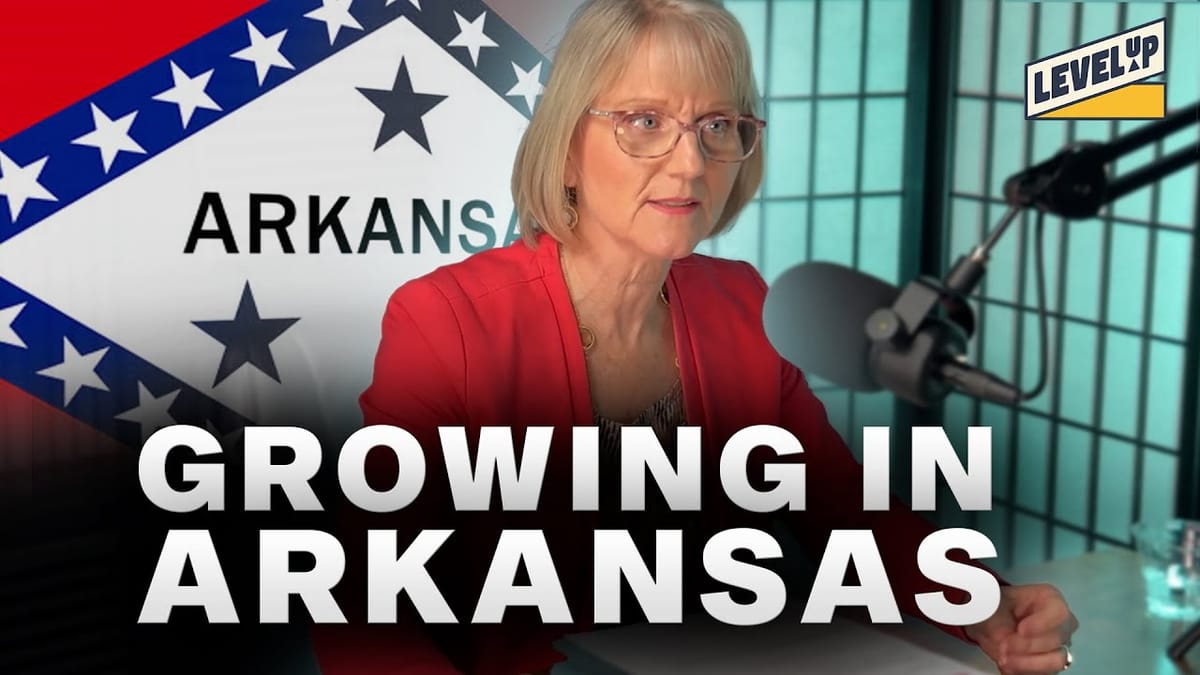
Walk into Rhonda Hawkin's office at Arkansas Tech with a dream and $500 in your pocket, and she won't laugh you out of the room. She's seen businesses launch on less. But walk in expecting to hit $10,000 in monthly revenue by month two? That's when she'll gently pull you back to earth.
After eleven years running the Arkansas Small Business and Technology Development Center in Russellville, Rhonda has heard every kind of business pitch imaginable. She's worked with clients who had half a dozen 3D printers and big plans. She's counseled construction veterans ready to hang their own shingle. She's even had multiple conversations with the same person about completely different business ideas—and that's perfectly fine with her.
The pattern she sees most often isn't a lack of good ideas. It's something much simpler and much more fixable: new entrepreneurs consistently underestimate how much cash they'll actually need.
The 3X Rule That NOBODY Wants to Hear (me included)
"It's kind of like if you've ever tried to remodel a house or had some vehicle work done," Rhonda explains. "It always takes three times as long and three times as much money as you thought. And so same is true for a business, especially getting started."
This isn't pessimism. It's pattern recognition from someone who has reviewed hundreds of financial projections. She regularly gets spreadsheets from eager founders showing $10,000 in monthly revenue starting from day one. Her response is always the same: "No, you're not."
Even conservative projections are hard to hit. Sales start slow unless you have signed contracts in hand. Expenses always find a way to creep higher. The rent increases. The utility bill surprises you. Equipment breaks. And suddenly, that carefully calculated runway gets a lot shorter.
According to the U.S. Bureau of Labor Statistics, about 20% of small businesses fail within their first year, and roughly 50% don't make it past five years. While there are multiple factors at play, the Small Business Administration consistently identifies insufficient capital as one of the primary reasons businesses close their doors. Arkansas specifically saw over 8,000 business applications filed in the first quarter of 2024 according to Census Bureau data, but without adequate cash reserves, many of those ventures won't survive their crucial early months.
Rhonda's advice? Keep your day job while you're building. "That's also gonna help you get a loan where they see that money's coming into the household so that you don't have to rely on the business to support the household initially."
It's not glamorous counsel. It doesn't fit the "quit your job and follow your dreams" narrative that dominates entrepreneurship content online. But it's the difference between a business that survives its first year and one that becomes another statistic.
The Market Research Most People Skip
Before Rhonda will help someone write a business plan or run financial projections, she wants to know if they've done their homework. Not the kind you do sitting at a computer reading industry reports—though that matters too. She's talking about the harder work of actually talking to potential customers.
"Customer discovery is behind the scenes," she says. "It's more having conversations with people." Not pitching. Not selling. Just listening for pain points.
She recommends a resource called "Talking to Humans," an ebook about customer discovery that she's sent to countless clients over the years. The premise is simple: get out of your head and into real conversations. Find out what problems people actually have, not what problems you think they have.
This matters especially in a market like Russellville. The city has a population hovering around 30,000 people. Many industries here are already at saturation level. If someone walks into Rhonda's office saying "there isn't anyone else doing this," her first question is always "why?"
"People have done that in the past. Why are they no longer doing that anymore? And the cold hard truth is a lot of times, the community just cannot support that particular business at the level that it needs to be supported so that you can pay your bills and pay yourself."
This is where the dual approach to market research comes in. Primary research means getting out and learning what customers actually want. Secondary research means looking at the cold hard data—how many people live in the trade area, how much they spent in that industry last year, how many competitors already exist.
When those two research methods align and show opportunity, you might have something. When they don't, it's time to either find a different angle or consider a different business entirely.
The Characteristics That Actually Matter
Rhonda doesn't claim to have a crystal ball. She can't look at a business plan and guarantee success or failure. There are too many variables. But she has learned to spot certain characteristics in the people sitting across from her desk.
Dependability. When she asks someone to send her information and they respond quickly, that tells her something. Responsibility. Resiliency—the ability to hear "that idea might not work" and come back with "okay, what about this instead?"
She's worked with the same clients on multiple different business concepts. One pair of women came to her with an idea she was skeptical about. The market seemed too small. They were fixated on a specific building. Rhonda pulled the numbers and gently suggested they reconsider. They stepped back.
Then they came back with something completely different: Southern 'Sipory' Mobile Bar. They bought a trailer, named it Jolene, and started booking events across the region. The business took off. Then they ran into a new problem—they needed somewhere to store the trailer and all their equipment. One of them told Rhonda her dining room was overflowing with glassware.
So they found a space in Morrilton. Not just for storage, but big enough to do something else with. They opened OrenwoodHall and Southern Social—a venue for events in the evening and a co-working space during the day. They solved their own problem and created a new revenue stream in the process.
"They were trying to solve a problem and they actually solve one of their own problems, but then they actually are able to make some money off of it too," Rhonda notes.
That's the entrepreneurial characteristic she's looking for. Not stubbornness about a single idea, but persistence in solving problems. Not attachment to one specific vision, but the ability to see opportunities in obstacles.
What "Small Business" Actually Means
Here's something that surprises most people: you might be eligible for small business assistance even if you don't think you're that small.
The ASBTDC is funded through grants and provides consulting at no charge. But many business owners assume they're too big to qualify. Rhonda wants to correct that misconception.
Under Small Business Administration definitions, a construction company can have 500 employees and still be considered small. A farm can pull in up to a million dollars annually. A women's clothing store can hit $30 million in revenue. All still "small" by federal standards.
The ASBTDC is part of a national network with centers in every state plus Puerto Rico, Guam, and other territories. Anyone with a for-profit business or a serious plan to start one can walk into a center and get help. You don't need to be a college student or alumni. Most of Rhonda's clients had never set foot on Arkansas Tech's campus before their first meeting.
She'll help with business plans, financial projections, marketing strategy, understanding your target customer, navigating regulations and compliance issues. Even questions as basic as "do I need to charge sales tax?" or "what kind of business permit do I need?"
And if she can't answer a specific question—like the intricacies of government contracting or exporting—she'll connect you with another agency in Arkansas that specializes in exactly that.
"Business answers, people," she says. That's her catchphrase. Whatever question you have, bring it. If she doesn't have the answer, she'll point you toward someone who does.
The Seasons of Business
Rhonda started her own business back in 1998—Mary Kay Cosmetics. Her kids were young. She was crying every day dropping them off at daycare. She wanted to be home with them and eventually homeschool them, which she did.
She built that business while working a full-time job, then eventually quit to focus on Mary Kay full-time. She earned the free car. She won five diamond rings for her sales. The business supported her family for years while she homeschooled her sons in the mornings and focused on clients in evenings and weekends.
Then her kids wanted to go to public school and play sports. Suddenly she was gone working her business when they were home—the opposite of what she'd wanted. So she scaled back. She maintained a core set of customers but stopped building. She moved into a different phase of work.
She still has that business. It's still there, ready to scale back up when she eventually retires from the ASBTDC. That's the beauty of understanding business seasons.
"A lot of people, they'll start a business and it can go through phases," she explains. "And so whatever season those businesses are in, it helps you as a person to know, hey, I can go back and do that some more."
The key is knowing the difference between a season and a fundamental problem. Her rule of thumb: "If it stresses you out to the point where you hate it, you don't like what you're doing, then you probably need to reconsider."
Running a business is hard. There's a saying she likes: "Yeah, you can work a business part-time. You just pick which 12 hours of the day you wanna work." Consistency matters. But when that consistent work starts making you miserable, it's time to either pivot or examine whether this is the right business model for you.
What's Coming for Russellville
Rhonda is careful about predictions. She won't tell you the single best business to start in Russellville over the next five years. There are too many variables, and the economy is forecast to continue fluctuating.
But she does see patterns. She sees opportunities tied to Russellville's new entertainment district and potential casino. The 2024 solar eclipse will bring visitors. The area's natural attractions draw tourists year-round. Those visitors need gas, food, and things to do.
The challenge with tourism-dependent businesses is sustainability. When the eclipse ends or the crowds thin out, the business still has to support itself. That's where multiple revenue streams become crucial.
She also sees trends in who's walking through her door. Lots of people from the construction industry going out on their own. Multiple clients exploring similar technologies or services at the same time. At one point, she had half a dozen clients with 3D printers, all trying to figure out how to monetize them.
One of those clients actually made it work. He came up with something that caught the attention of a national sporting goods chain. That's the exception, not the rule. But it illustrates another principle: the scalability question.
"Having that idea that can be scalable, that's another thing," Rhonda says. "You have to be able to grow and not just be at your full capacity, not making money at your full capacity, because then what do you do next?"
Her broader advice: look for businesses that provide necessities. Not recession-proof—that doesn't really exist—but services and products people genuinely need regardless of economic conditions.
The Best Mistakes to Make
When asked about the biggest mistakes new entrepreneurs make, Rhonda circles back to cash. Always cash. Underestimating how much you'll need and how long it will take to become profitable.
But there's another mistake she sees: not having enough experience in the industry you're trying to enter.
"I've gotten some people into my office, 'Oh yeah, I wanna open a restaurant and I just have a good recipe,'" she says. "Have you cooked for 200 people every day, six days a week? Do you know how to order food?"
Compare that to the construction veteran who came in recently. Six years of experience. His own tools. A portfolio of satisfied customers. Cash in the bank. Good credit score. "He's gonna be okay."
The difference isn't intelligence or work ethic. It's understanding what you're actually getting into before you risk your savings on it.
And here's something that might surprise you: Rhonda doesn't mind when clients come back with completely different business ideas. She's seen the same person three or four times, each visit about a different concept. That doesn't bother her.
"I would advise not to feel bad about that because I have seen, I have worked with client after client that, and sometimes I go, 'Okay, here they are again,' but it's okay because if that one doesn't work, let's look at something different."
What she does need to know is when you've decided not to pursue something. Don't leave the conversation hanging. Tell her you're moving on so she can shift directions with you.
The entrepreneurial journey isn't linear. It's not always the first idea that works. Sometimes it's the third or fourth. The characteristic that matters most isn't having the perfect plan from day one. It's having the resilience to keep trying when the first plan doesn't pan out.
Getting Started
If you're thinking about starting a business in Russellville or anywhere in Arkansas, Rhonda wants to hear from you. But she does have a quick filter before scheduling a meeting.
She wants to understand your idea, at least a little. She wants to know how you plan to fund it. If you have a small home-based business concept and some savings, great—let's talk. If you have a $2 million idea, a 530 credit score, and no savings, you're not ready yet. There's simply nothing she can do with that scenario until you improve your financial position.
Call the ASBTDC at 479-356-2067. After a brief conversation, she'll send you a quick online intake form. Everything you share is confidential. Then you'll get a link to schedule a meeting—by phone, video conference, or in person at Arkansas Tech's campus in Russellville.
There's no cookie-cutter approach. Every meeting is tailored to where you are now and where you want to be. Sometimes that means business plans and financial projections. Sometimes it means answering basic compliance questions. Sometimes it means pulling market data to test an assumption.
The service is free. It's funded by grants specifically so that people like you can get professional guidance without adding another expense to an already tight budget.
Listen to Rhonda's full conversation on the Russellville podcast episode here:
She shares more stories about local entrepreneurs, digs deeper into market research strategies, and offers specific guidance on everything from QuickBooks to AI tools for small businesses.
Starting a business is hard. Rhonda won't sugarcoat that. But it's also possible—even in a market the size of Russellville—if you go in with your eyes open, your finances in order, and a willingness to adapt when your first idea meets reality.
The question isn't whether you'll make mistakes. You will. The question is whether you'll make them with enough cash in the bank and enough resilience in your character to learn from them and keep going.
Rhonda has since retired from the ASBTDC and James Guhl has taken over this local office. Expect another podcast featuring James Guhl in 2025 from Town Square & LevelUp Russellville